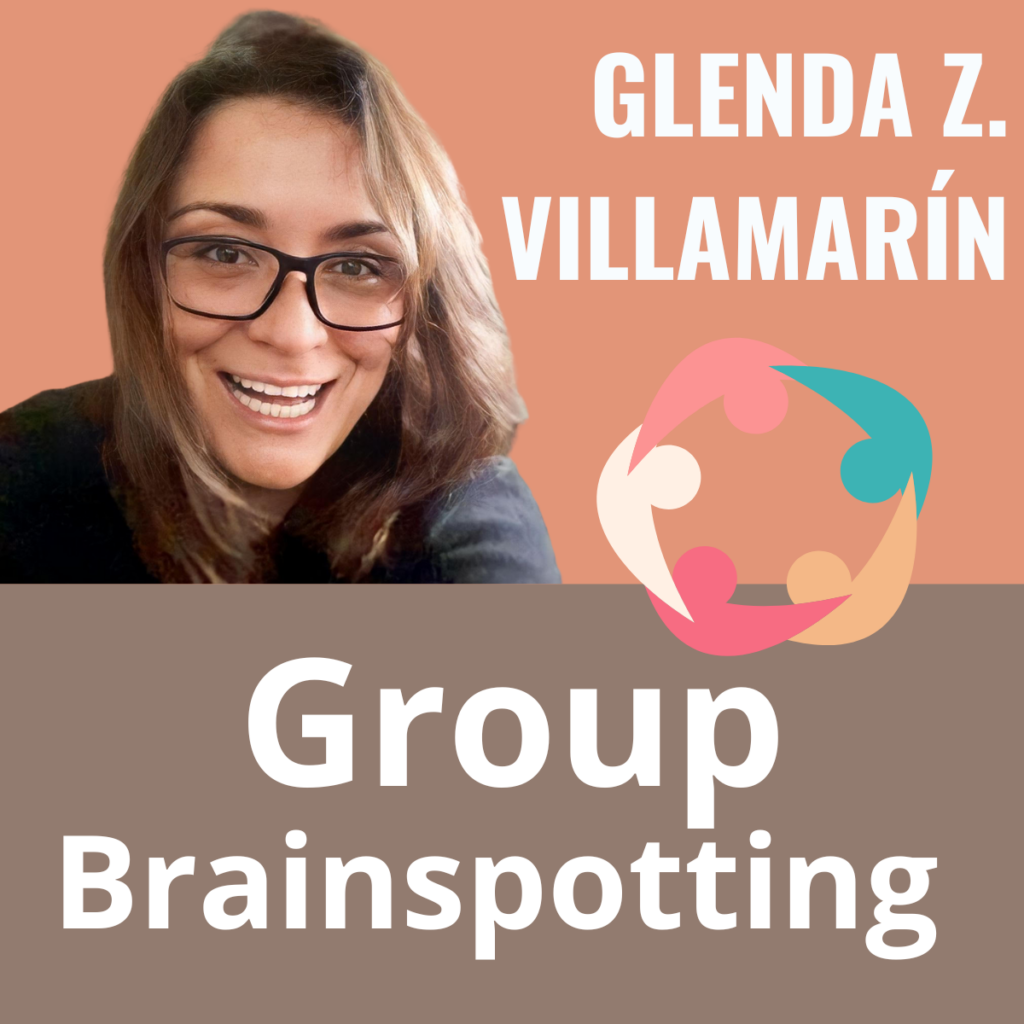
International training with translation into Polish
The training will not be recorded
Phase 2 completion is recommended
Limited number of participants
Price range and training cost:
Group Brainspotting with Glenda Z. Villamarín
Dates:
6 days – March 11, 12, 13 and March 18, 19, 20, 2026 (Online)
Time:
5:00 PM – 9:15 PM CET
12:00 PM – 4:15 PM EDT
The training consists of six half-day modules and combines theory, practical experience, and shared reflection. Each day includes a theoretical, experiential, and consultation component.
Brainspotting is a powerful and focused treatment method. It works through identifying, processing, and liberating the neurophysiologic nuclei of a variety of defiant symptoms associated with emotional/physiological pain, trauma, and dissociation.
The training in Group Brainspotting prepares the participants to use the theory and different types/setups of BSP hand by hand with group theory and practice. It conjugates Brainspotting with Psychodrama, Theraplay, and neuroscience. The participants will be able to use what they learn in this theoretical and practical training in their everyday practice when working with groups and crisis intervention.
In addition, the training provides consultation hours. Through this, the training will provide the space to enhance/develop abilities for Group Brainspotting.
By completing the Group Brainspotting Training, participants will be able to:
– Apply different Brainspotting setups and configurations appropriately within group settings.
– Identify the fundamental pillars of Brainspotting theory and understand how these principles support effective Brainspotting group work.
– Explain the benefits and professional applications of using Brainspotting as a group intervention tool.
– Recognize the neurological foundations underlying trauma processing and group dynamics.
– Use the introduction to group work to distinguish different types of groups and stages of group development, applying these concepts within Group Brainspotting practice.
– Define three main goals for group work and crisis intervention.
– Describe essential considerations in group facilitation, including psychoeducation, stabilization, use of materials, history taking, psychometrics, and follow-up processes.
– Identify inclusion and exclusion criteria relevant to the various stages of group work.
Agenda for the training (6 half-training days)
The Role of:
Group Selection:
Experience:
Presenter:
Glenda Z. Villamarín, MA, LCP, is a psychologist from Ecuador (South America) deeply committed to trauma healing and cultural studies. She is the author of Cultural Critique and Psychology: Attachment Theory in Ecuador (2023) and co-author of Tunkawan: The Path of Wisdom (2024).
Glenda is honored to serve as an NMT trainer with the Child Trauma Academy and holds certification in Child-Parent Mental Health from UMass Boston (2018–2019). She is a certified Theraplay therapist, supervisor, and trainer, as well as a certified EMDR therapist, approved supervisor, facilitator, and full trainer with the Latin American team at the EMDR Institute. Additionally, she is a certified Brainspotting therapist, supervisor, and trainer for the Brainspotting®️ Institute, where she supports professionals across Latin America.
She holds a Master’s in Cultural Studies from UASB-Ecuador and a psychology degree from the Catholic University of Ecuador (PUCE). Passionate about integrating trauma-informed care with cultural perspectives, she also practices as a therapeutic psychodramatist certified by the Association of Psychodrama and Sociometry of Ecuador (APSE), where she previously served as President and continues to contribute as a trainer.
Glenda has been fortunate to collaborate in various professional spaces. She co-coordinated the III Ibero-American Congress of EMDR and Psychotrauma, served as the trainer in charge of Bolivia (2014–2016), and has been teaching in postgraduate programs at the Universidad Andina Simón Bolívar, Ecuador, since 2006. She is also an Ancestral Therapist for JYW 2025.
She is grateful to lead Serendipitá Ecuador, where she works with adults, children, adolescents, and families navigating different challenges.

